
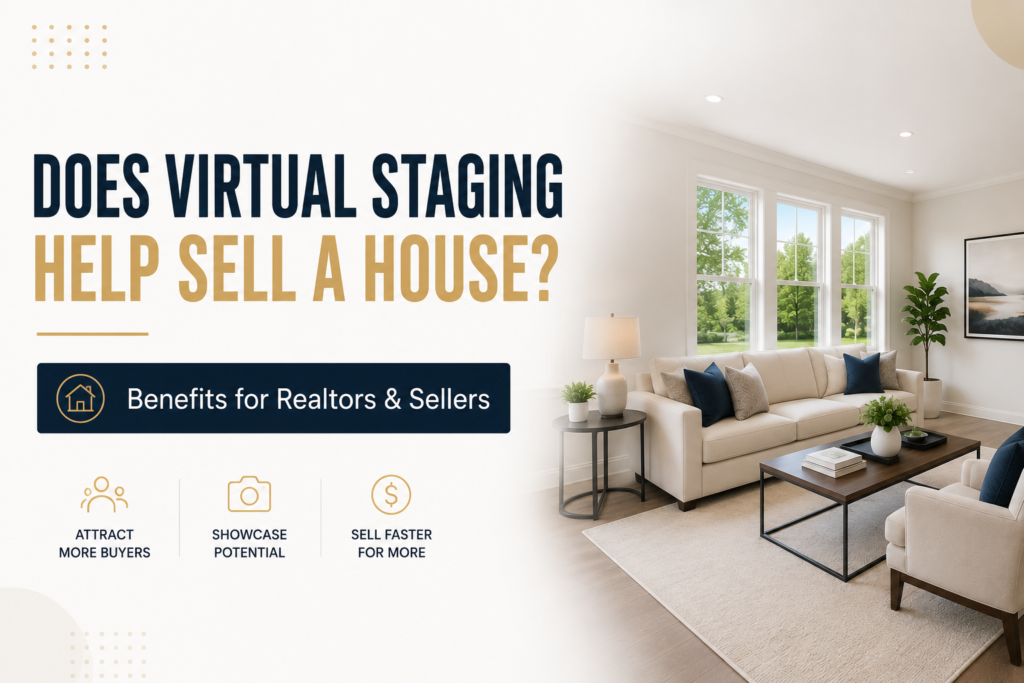
Most home buyers don’t fall in love with a property when they walk through the front door anymore. They fall in love while scrolling on their phone.
A few listing photos are often enough for people to decide whether a property deserves a second look or gets ignored.
That’s why presentation has become such a big deal in real estate. And in recent years, one tool has quietly changed the way listings are marketed: virtual staging.
But the question still comes up all the time: Does virtual staging help sell a house, or is it just making photos look nicer than reality?
Let’s talk about what actually matters in real estate decisions.
So, What Is Virtual Staging Really?
Think of virtual staging as giving an empty home a digital makeover.
Rather than introducing real furniture, designers use software to add sofas, beds, lighting, and decor to photos. The result is a realistic image that shows what a space could look like when lived in.
It’s commonly used for:
- Empty homes that feel cold or hard to understand
- New properties with no furniture yet
- Older homes that need a modern feel
- Sellers who want better marketing without high staging costs
While it enables buyers to move beyond “empty rooms” and “a home.”
Does Virtual Staging Help Sell a House?
Yes, but not in a magical way.
It doesn’t change the house itself. What it changes is the way people feel about the house.
An empty room can feel smaller than it really is. It can feel confusing. Buyers often struggle to understand how they would actually use the space.
Virtual staging removes that mental block. Suddenly, the bedroom looks like a bedroom. The living room feels warm and inviting. The dining area has a purpose.
And that clarity matters more than most sellers realize.
So, if you’re asking, does virtual staging help sell a house? The honest answer is: it helps buyers understand and connect faster, and that’s what leads to interest.
Why It Works on Buyers (Even When They Don’t Notice It)
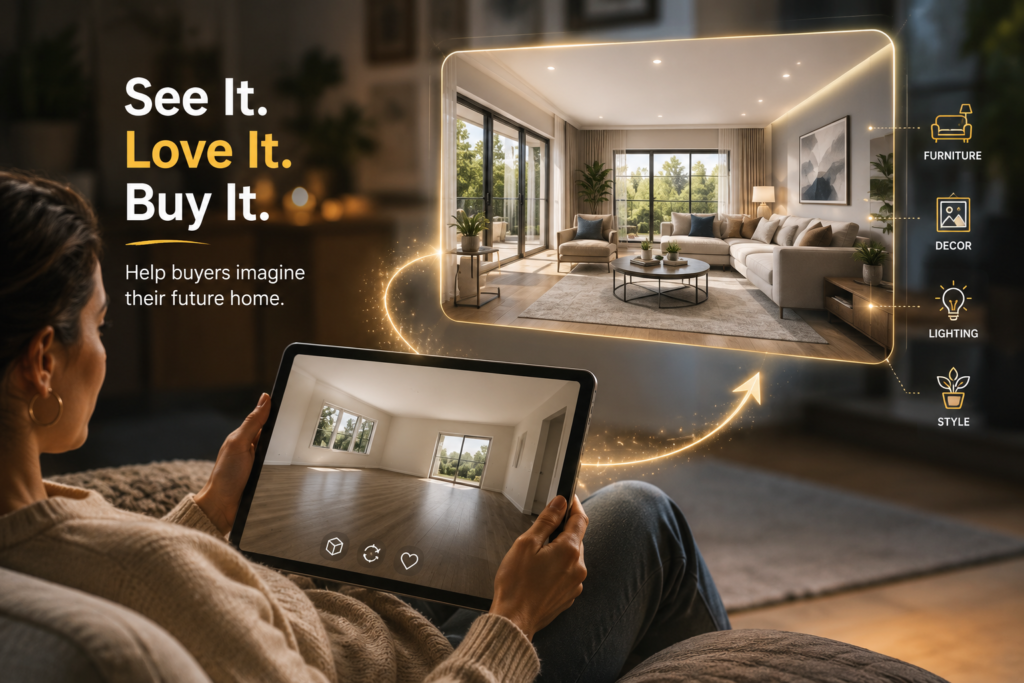
Real estate decisions aren’t always logical. People react emotionally first.
A well-staged image quietly tells a story:
- “This home is cared for.”
- “This space feels livable.”
- “I can imagine myself here.”
That feeling is powerful.
This is exactly why virtual staging for home sellers has become so common. It doesn’t just decorate a photo, but it builds imagination.
And in real estate, imagination often leads to action.
Does Virtual Staging Help Homes Sell Faster?
In many cases, yes.
The reason is simple: attention.
When listings look more appealing online, they naturally get:
- More clicks
- More time spent viewing photos
- More showing requests
That extra attention can shorten the home-selling process because interested buyers move more quickly.
It’s not that staging “forces” a fast sale, but it just removes the hesitation that slows people down.
Does Virtual Staging Increase Offers?
Not directly, but indirectly, it can make a difference.
Buyers don’t always bid based on logic alone. They bid based on how much they want the home.
If a home appears to be well-designed and move-in ready, it can seem more valuable, although nothing about the structure has changed.
That emotional lift can lead to:
- More interest from multiple buyers
- Stronger competition
- Better negotiation position for sellers
So while it doesn’t change the price tag, it can influence how people respond to it.
Virtual Staging vs Traditional Staging
Both methods are suitable, but different.
Real furniture is used for traditional staging. It has a real and tangible feel that can be appreciated for upscale homes or in-person viewings.
While virtual staging for realtors is purely visual. It works through listing photos, where most buyers start their journey.
Here’s the simple difference:
- Traditional staging sells the experience
- Virtual staging sells the first impression online
And in today’s market, that first impression often decides everything.
Why Sellers and Agents Are Using It More
There are a few reasons virtual staging for realtors has become so popular:
- It makes listings stand out instantly
- It improves engagement on property websites
- It works fast, no setup or logistics needed
- It costs far less than physical staging
- It helps buyers understand space better
For real estate agents managing multiple listings, it’s become a practical way to improve results without increasing budget pressure.
What About the Cost?
Compared to traditional staging, virtual staging services are significantly more affordable.
There’s no furniture rental. No moving teams. No waiting.
It’s usually priced per image, which makes it flexible for different types of listings.
For sellers working with vacant homes, this can be a game-changer, especially when trying to make a property look “ready” without spending heavily.
Many agents use professional services like a virtual staging studio to get realistic, market-ready images that actually feel natural, not over-edited or artificial.
Before and After: Why It Makes Such a Difference
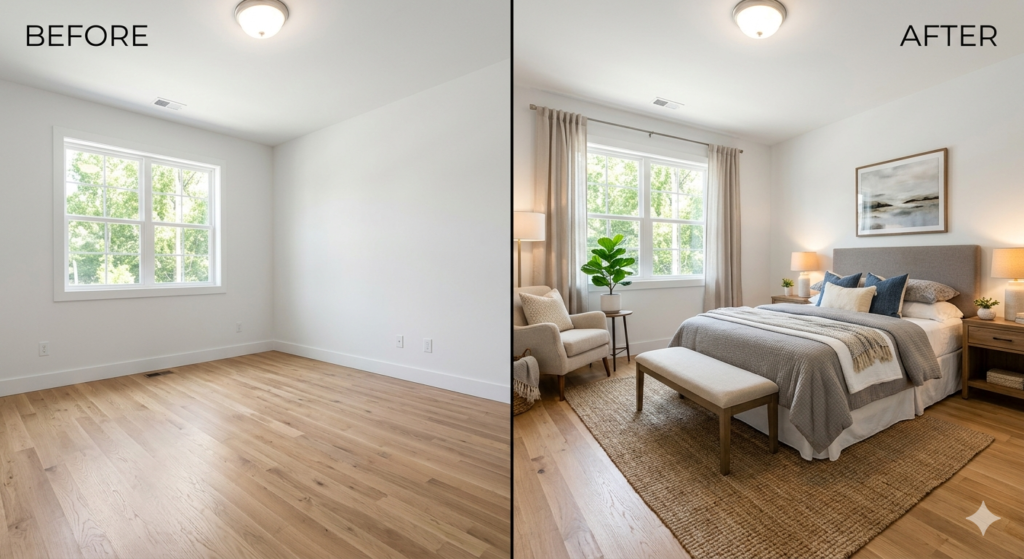
The transformation is often surprising.
Before staging:
An empty room feels flat. Buyers can’t tell how big it is or what it’s for.
After staging:
The same room suddenly has personality. The scale becomes clear. Function makes sense.
That shift might seem small, but it’s exactly what keeps people engaged longer on listings.
And in real estate marketing, longer attention usually means stronger interest.
When You Should Use Virtual Staging (and When You Shouldn’t)
Virtual staging works best when a home feels visually incomplete.
Good situations include:
- Vacant properties
- New builds
- Outdated interiors
- Online listings where photos matter most
But it’s not always the right choice.
Be careful when:
- Buyers see the home, and they anticipate it will be exactly as seen in the photos
- Luxury homes rely heavily on physical presence
- Transparency is important
Well used, it fosters trust and enhances marketing. Used carelessly, it can do the opposite.
Is Virtual Staging Worth It?
So, does virtual staging work in real estate today? Yes, but only when it’s used with purpose.
It doesn’t sell a home by itself. But it does something just as important: it helps buyers see the home clearly enough to care about it.
And in a market where attention is short and competition is high, that clarity can make all the difference.
For sellers and agents who want to improve how their listings perform online, virtual staging services isn’t just a design trick anymore; it’s part of modern real estate strategy.
If you want to turn empty rooms into listings that actually get noticed, explore the virtual staging studio to see how a better presentation can change how buyers respond to your property.
Ready to Transform Your Property Photos?
Get professional virtual staging that makes your property photos more attractive to potential buyers.