
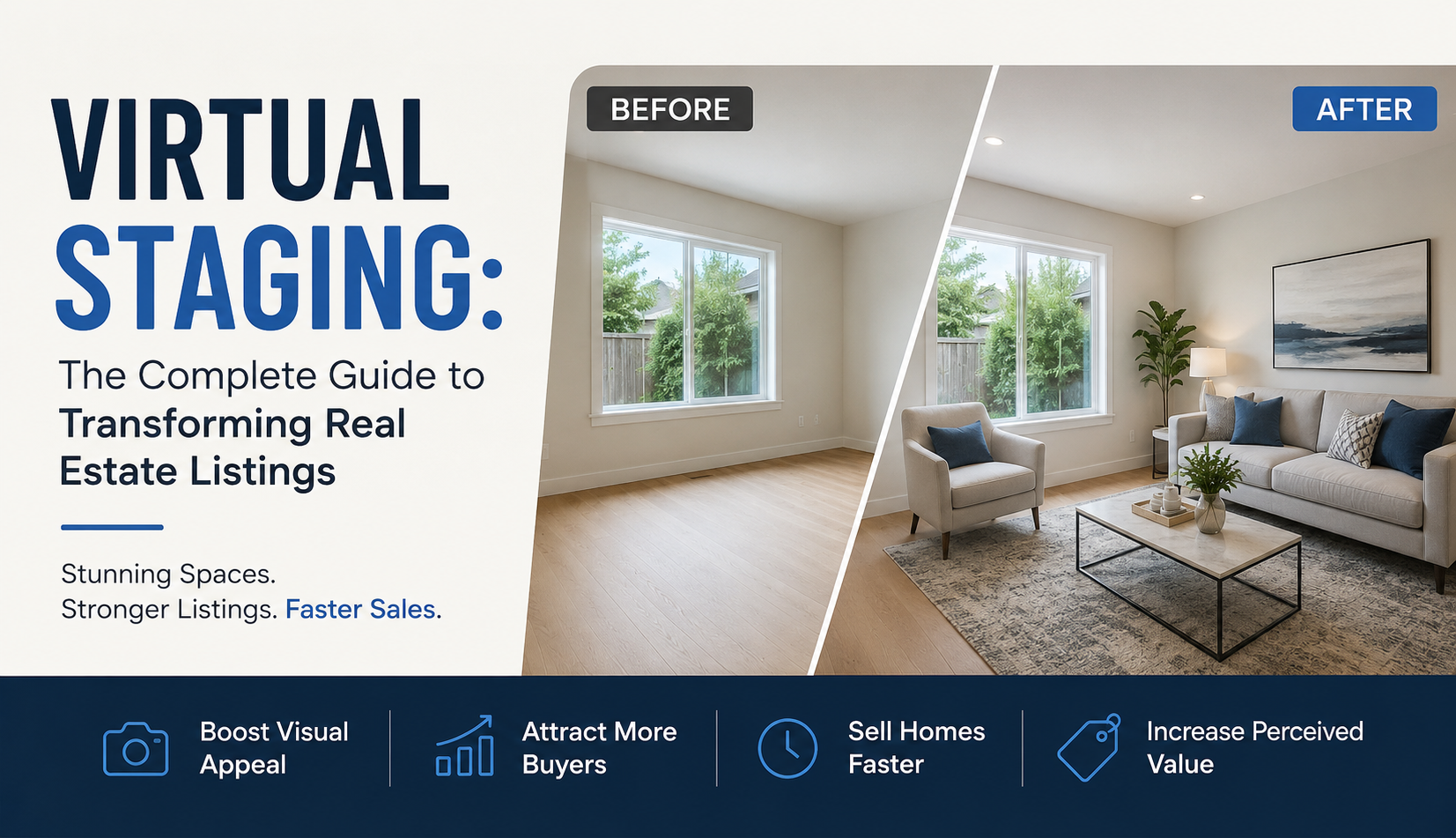
Nobody swipes past an empty room and thinks “sold.” You get maybe two seconds per photo, and if the room is bare, you are stuck doing the imagining yourself: where the couch goes, whether the space actually feels as big as the listing claims, whether it looks anything like a place you would want to live. Virtual staging does that imagining for the buyer. Take a photo of an empty or outdated room, run it through the process, and it comes back furnished and finished, no moving trucks, no rented sectional sitting in a warehouse somewhere.
That is the whole appeal of virtual staging services at this point. They have become a fairly ordinary step in getting a listing ready, not some optional upgrade. This piece looks at which properties get the most out of it and what actually separates a provider worth your money from one that is just slapping furniture into a photo.
Why Virtual Staging Has Become Essential in Modern Real Estate Marketing
Home shopping happens on a screen first, showings second, so bare rooms already put a listing behind. A few problems pushed the industry toward real estate virtual staging:
- Renting furniture can run into the thousands, and the home is locked into one look until the truck comes back.
- An empty room photographs colder and smaller than it feels in person.
- A stager’s calendar rarely lines up with when a listing needs to go live.
- Different buyers viewing the same listing want different things, and one physical setup cannot serve both.
Virtual home staging solves this without a truck ever showing up, and the same photos can be reworked into several styles without a second shoot.
How Virtual Staging Transforms Empty Properties into Buyer-Ready Listings
Creating a Strong First Impression
A listing photo does not get a second try. Furnish the room and it looks done the moment someone lands on it. That impression tends to carry through the rest of the gallery.
Helping Buyers Understand Room Function
Most homes have a room nobody quite knows what to do with. Virtual staging settles that question before a buyer has to ask, by providing a digitally staged photo using a software.
Increasing Online Listing Appeal
Staged listings pull more clicks from portals and social posts, and more inquiries in the first week live. Recent tracking has put the click gap between staged and unstaged listings close to 90 percent.
Key Benefits of Virtual Staging Services for Realtors and Home Sellers

Benefits for Real Estate Agents
Virtual staging for real estate agents cuts out scheduling a physical crew. Delivery comes back in hours or days, and an agent can walk into a listing appointment with a finished pitch already in hand.
Benefits for Home Sellers
For most sellers, cost decides it. Physical staging can run into the thousands, while digital staging is usually priced per image at a fraction of that, with no move in or move out to coordinate.
Benefits for Property Investors
A unit can be marketed before renovations are finished, which helps lock in interest earlier, and the process scales across many units without a matching jump in cost.
Types of Properties That Benefit from Real Estate Virtual Staging
Residential Homes
Living room, primary bedroom, kitchen: those are the three a buyer opens first, so they are the ones that really need to sell the place.
Apartments and Condominiums
Smaller units gain more from smart furniture placement than elaborate decor. Getting the scale right keeps a compact room from reading cramped.
Luxury Properties
Buyers here expect a polished, high end look in every room shown, and one generic furniture choice can drag down otherwise strong photos.
Commercial Office Spaces
Furnished desks, meeting rooms, and common areas, and a tenant looking at furnished desks and a set-up meeting room can actually see themselves running the business there, not just staring at four blank walls and a lease number.
| Property type | Where staging matters most | Why it matters |
| Residential homes | Living room, primary bedroom, kitchen | These are the rooms buyers click through first |
| Apartments and condominiums | Main living area | Correct scale keeps a small unit from reading cramped |
| Luxury properties | Every showcased room | Buyers expect a refined look throughout |
| Commercial office spaces | Desks, meeting rooms, common areas | Helps a tenant picture running a business there |
Virtual staging for realtors working across all four categories usually means keeping several design styles on hand.
Choosing the Right Virtual Staging Services
Check these before sending over a set of photos:
- Turnaround time. A week is too long. If it is not back in a day or two, most of the point is gone.
- Realism. Ask for real before and after work, not homepage samples, and check whether shadows and scale hold up.
- Design variety. More style options mean an easier match to the buyer a listing is targeting.
- Clear virtual staging pricing. Per image or per room pricing is easier to plan around than a bundled package.
- Revision policy. Small changes come up more than expected, so know how those are handled upfront.
Final Thoughts
Virtual staging stopped being a workaround for vacant homes a while ago. Agents get a stronger pitch, sellers get to closing faster and for less money, and buyers get a real sense of the space before they ever book a showing.
Find a virtual staging services provider you actually trust, and that is often the one thing standing between a listing people stop scrolling for and one they don’t.
Frequently Asked Questions
What is the difference between virtual staging and traditional staging?
| Traditional staging | Virtual staging | |
| Cost | Higher, ongoing rental fees | Lower, typically priced per image |
| Setup time | Days to weeks | Hours to a day or two |
| Flexibility | One look for the rental period | frequesntly Several styles from the same photos |
Can virtual staging be used for occupied homes?
Yes. It shows up mostly on vacant properties, but also works on occupied ones, usually to swap dated furniture in photos or try a different look.
Is virtual staging accepted on major real estate listing websites?
Yes, it is acceptable in most of the platforms as long as the listings state it is digitally staged.
How do I choose a reliable virtual staging company?
You can look for real estate experience, realistic sample work, fast turnaround and a fair pricing or revision policy. Just label it as staged, and you’re good to go on any major site. Get started →
Ready to Transform Your Property Photos?
Get professional virtual staging that makes your property photos more attractive to potential buyers.