
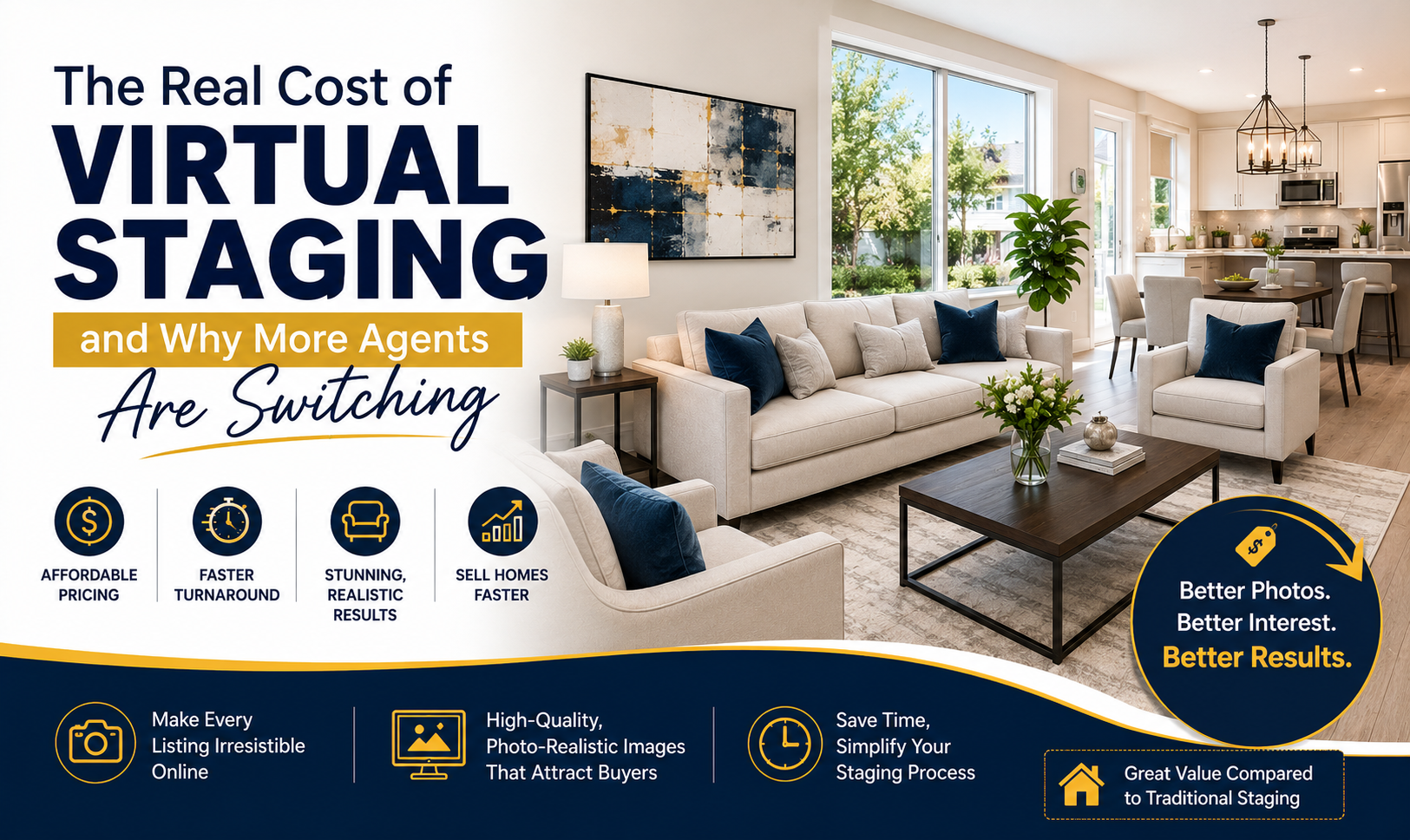
The first impression is crucial when selling a house. These days, that impression often happens on the Internet, where home buyers scroll through the images of listings and decide if it is worth visiting.
While traditional home staging can be a great way to present an appealing home, it may require hiring furniture, delivery, setup, and coordination. Virtual staging is a more convenient option to create a more upscale appearance in the home’s empty or outdated spaces without the need to move furniture.
Therefore, realtors should know about the virtual staging cost and when it is worthwhile.
What Virtual Staging Cost?
The prices will depend on the service, photo editing, and quantity of photos required. The cost of virtual staging typically ranges from $16 to $75 per photo. It depends on the virtual staging service and the specific level of detail needed.
The pricing may also be influenced by the number of rooms, images, design options, etc. Whether or not you require any further editing. Therefore, while considering virtual staging cost, you should not only consider the price but also what is included in the price.
Virtual Staging Pricing vs. Traditional Home Staging
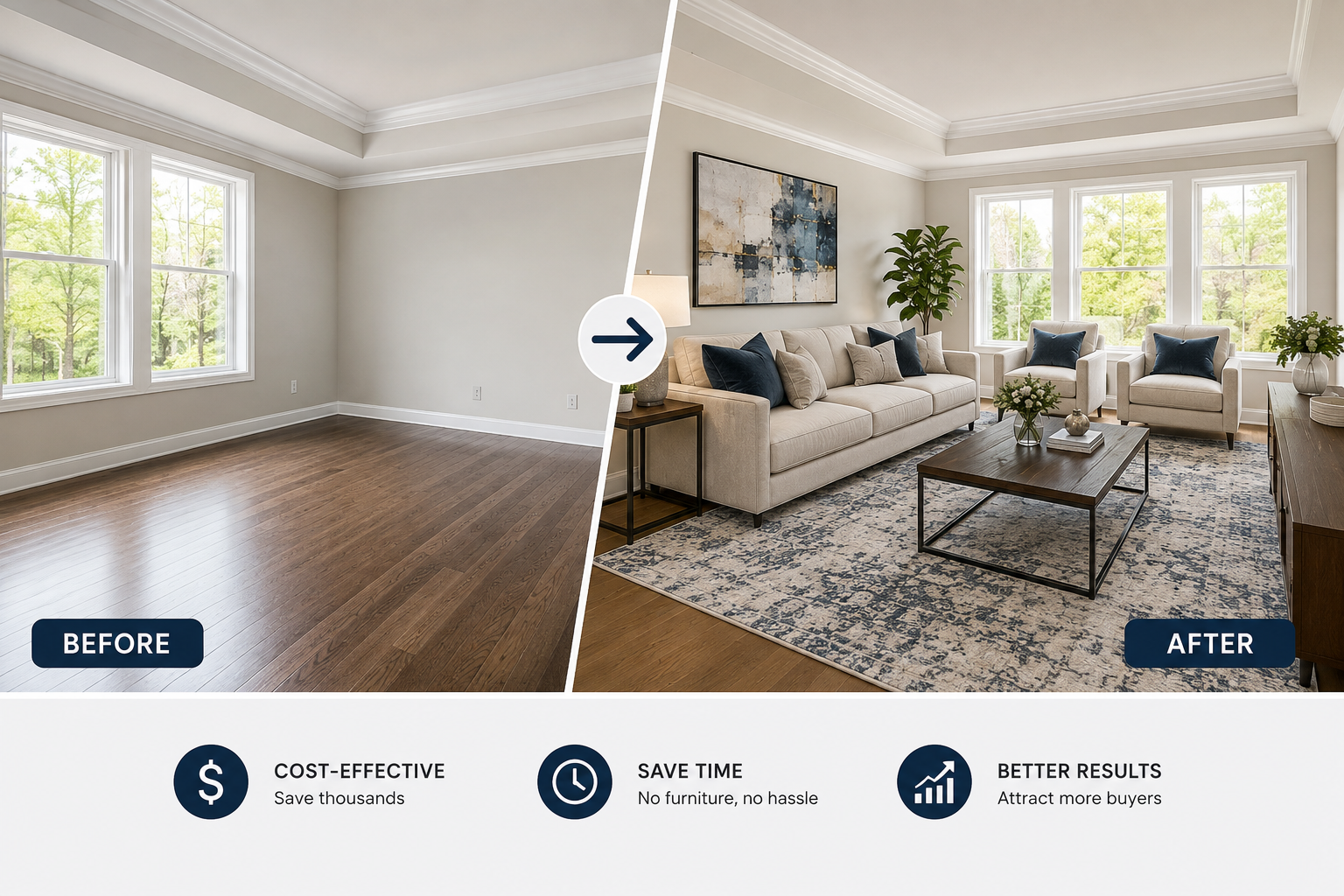
Traditional staging can involve furniture rental, delivery, setup, removal, and coordination. Virtual staging removes many of these physical steps.
| Cost Factor | Virtual Staging | Traditional Staging |
| Furniture | Digital | Physical rental |
| Delivery | Not required | Required |
| Setup | Not required | Required |
| Removal | Not required | Required |
| Design flexibility | Multiple styles | Depends on available furniture |
| Property access | Minimal | Often required |
| Logistics | Simple | More involved |
If you are a busy realtor, you may find it easier to prepare a listing with fewer moving parts.
Why More Realtors Are Considering Virtual Staging
Buyers are able to simply look through several dozen homes on the phone without ever needing to view them. An empty room can make them wonder about what furniture they could put in that space, and an old room can make it difficult to visualize living in it.
Virtual staging helps bridge that gap by showing what a room could look like with carefully selected furniture and décor.
Another advantage of virtual staging for realtors is flexibility. Rooms can be digitally furnished in styles that fit the property and its intended audience.
What Are You Actually Paying For With Virtual Staging?
Virtual staging is more than just adding a sofa and coffee table to a picture. A good staging should be natural and match the room’s style.
Furniture must be scaled and placed correctly; décor, lighting, and shadows must produce a realistic impression.
Virtual Staging Studio offers photorealistic interiors, luxury design styles, high-resolution exports and plans with commercial usage rights.
The value lies in making slick marketing photos that allow potential buyers to envision a property’s possibilities.
Is Cheap Virtual Staging Always the Better Option?
Not always.
The lowest price might turn out to be a drawback when the furniture designs seem unrealistic, proportions are wrong, and the editing appears too noticeable.
When looking at virtual staging pricing, consider the image quality, design options, usage rights, and professionalism of the finished product.
The aim is not to only get the lowest price but to get the best deal for quality and price.
How Virtual Staging Can Save Realtors Time
Time is as important as money for a busy Realtor!
Furniture delivery, access to the property, setting up and furniture removal may be required for traditional staging. Most of these are eliminated through virtual staging.
After the right type of property photos are captured, the rooms can be digitally staged without furniture or a staging crew.
This can simplify the marketing process for agents who have more than one listing.
When Is Virtual Staging Worth the Cost?
Virtual staging can be especially helpful when selling an empty home. Because spaces with a lack of furniture can be challenging to envision.
It is also suitable for investment properties and new listings or spaces where agents wish to demonstrate various design options.
Virtual staging does not modify the physical property. It allows buyers to visualize the space by digitally decorating and furnishing it.
How Much Should Realtors Budget for Virtual Staging?
No single budget is ideal for all realtors. The requirements will vary according to the volume of properties you list and the frequency of virtual staging.
Depending on the agent’s need, a few images may be enough for an occasional property, whereas a busy real estate virtual staging team may need more. Virtual Staging Studio also has premium packages that are available to businesses who require custom workflows and agency-level solutions.
It’s best to pick a package that suits the real work you are doing.
Virtual Staging Cost Is Only Part of the Equation
Once you have considered the price, look at the overall value.
Value for money can affect whether a service is worth it or not. It is based on image quality, design flexibility and commercial usage rights.
The best choice is not necessarily the cheapest provider. It is the one that brings you the right quality and convenience.
Why Virtual Staging Studio is the Best Option?
Virtual Staging Studio’s virtual staging pricing applies to varying sizes of projects from a single room to a larger property marketing project.
| Plan | Price | Room Credits | Average Cost |
| Basic | $39 | 1 | $39/photo |
| Standard | $149 | 5 | $30/photo |
| Premium | $1,999 | 80 | $25/photo |
Every plan comes with photorealistic interiors, luxury design style, high-resolution exports, and commercial usage rights.
Cost is just one aspect of the decision. It is best to compare virtual staging with the old-fashioned way of doing it to understand its importance.
Does Staging Help a Property Perform Better on the Market?
Staging can also give buyers a better sense of layout, an idea of how rooms might be used, and help buyers relate to a property via listing photos.
But staging is not a guarantee of a particular sales result. Factors that impact how a property performs include location, property condition, photography, market and buyer demand.
Thus, when you are using virtual staging, it’s best to use it in conjunction with other property marketing tactics.
Curious whether staging actually moves the needle on sale price? Read our full breakdown: Does staging really increase sale price? See the data
Conclusion
The right virtual staging cost isn’t always the cheapest. It’s all about picking a solution that provides professional listing images, while still making staging easier and more flexible.
Virtual staging can be useful for realtors looking to present buyers and potential home buyers with a space that has been furnished without having to make the furniture arrangements, as well as vacant and dated properties or properties that are difficult to “see in.”
Ready to see what your next listing could look like? Explore the Virtual Staging Studio pricing plans and find an option that fits your needs.
Frequently Asked Questions
1. What factors affect virtual staging cost?
The cost of virtual staging can vary depending on the number of rooms, package chosen, image requirements, and the type of staging required for the property.
2. How does virtual staging pricing compare with traditional staging?
You can save money with virtual staging, as it does not require the rental, delivery, setup, and removal of furniture.
3. Can virtual staging be used for vacant properties?
Vacant properties are often easier to present virtually with furniture and décor, allowing buyers to get a sense of what the space might look like when furnished.
4. Is virtual staging useful for realtors?
Yes. Virtual staging for real estate agents can enhance the appeal of real estate listings and save on staging time and coordination.
5. What should realtors look for in a virtual staging service?
When evaluating a provider, realtors should take into account image quality, realistic furniture placement, design options, turnaround time, usage rights, and value.
Ready to Transform Your Property Photos?
Get professional virtual staging that makes your property photos more attractive to potential buyers.