
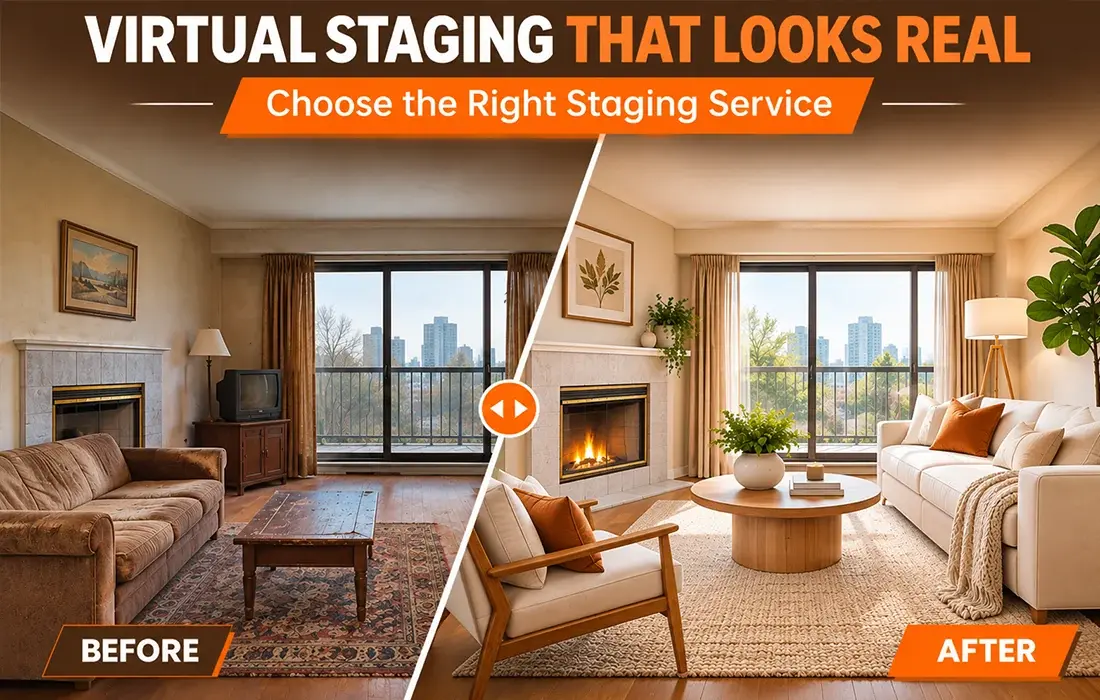
Have you ever seen a listing photo where the sofa looks like it’s floating above the floor? Buyers notice these things, and when the staging looks fake, they start to doubt the rest of the listing.
Good virtual staging does the opposite. It turns an empty room into a space buyers can imagine themselves living in, usually more affordable than renting real furniture. But quality varies a lot between providers.
This guide helps you choose the right virtual staging services. You’ll learn how to spot bad work, decide between a pro and DIY, check a provider, and know what happens after you hire.
Fake vs. Real: How to Spot Bad Virtual Staging in Seconds
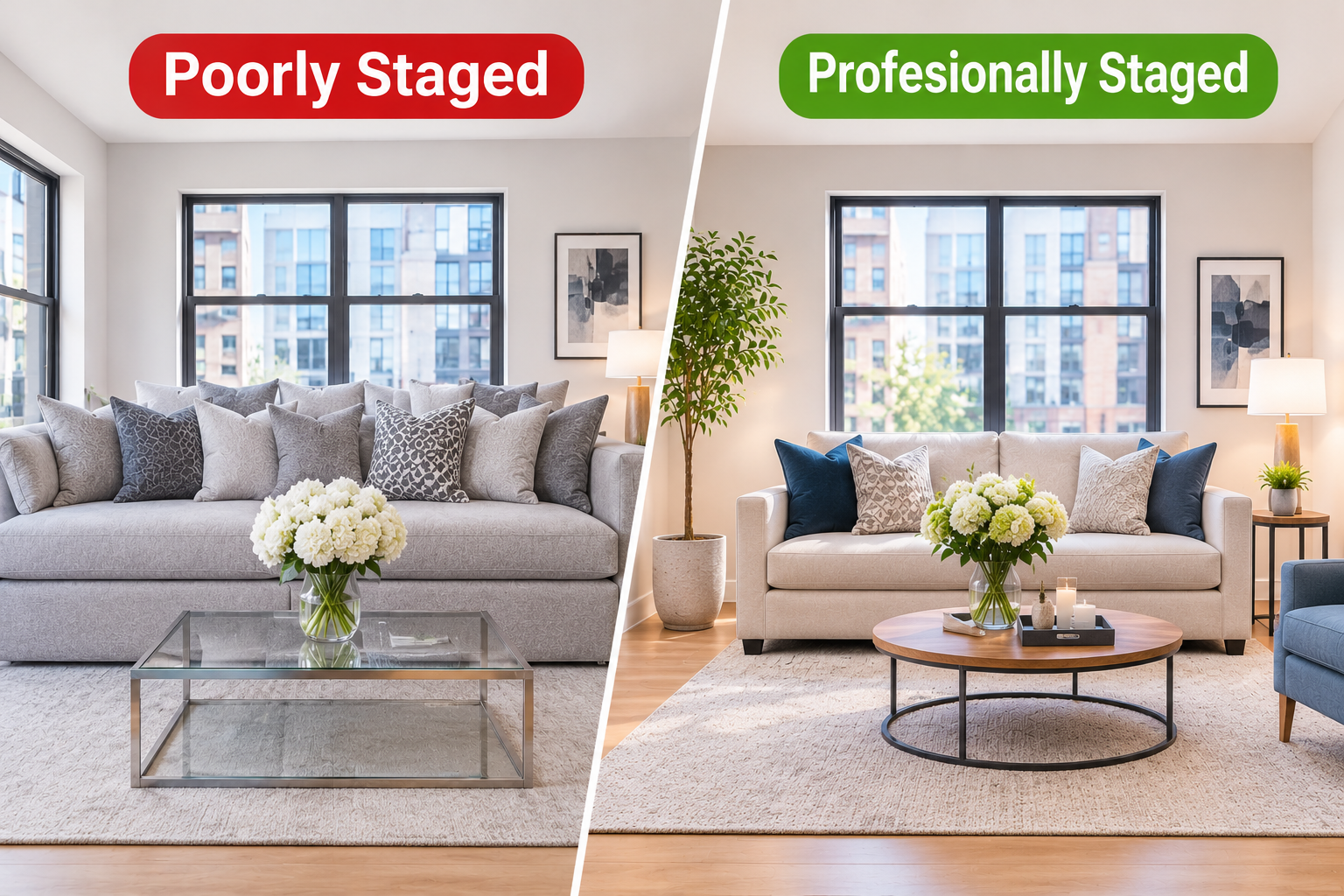
The fastest way to judge a provider is to know what bad work looks like and what good work does differently.
| What bad staging looks like | What good staging looks like |
| The furniture is the wrong size. A huge sofa fills a small room. | The furniture matches the room’s size. There is clear space to walk around each piece. |
| The shadows point the wrong way. They don’t match the window light. | The shadows match the light. Shadows and reflections follow the real windows. |
| The furniture looks like it’s floating. Nothing touches the floor. | The furniture sits firmly on the floor. Each leg has a soft shadow beneath it. |
| The materials look flat. Fabric and wood looks like a drawing instead of real materials. | The materials look real. Fabric shows its weave and wood shows its grain. |
| The room is overcrowded. Fifteen pillows compete for attention. | The room is simple. A few neutral accessories let the room stand out. |
One factor is outside the designer’s control: your original photo. Staging can’t fix a blurry or dark image, so shoot in daylight and keep the camera level.
These details matter because buyers trust believable photos, and a buyer who trusts a listing is more likely to book a showing. That trust is what professional virtual staging protects.
Pro vs. DIY Virtual Staging: Which Should You Choose?
Once you can spot good and bad staging, the next question is who should do the work. DIY virtual staging apps work well for a quick social post or a rough layout idea.
The downside is that you make every decision yourself, including furniture size, placement, and lighting.
Professional virtual staging makes more sense when:
- The home is high-priced or in a competitive market
- You want every room to follow the same style
- You don’t have time to learn new software
Wondering whether to handle staging yourself or hire an expert? Explore DIY Virtual Staging vs Hiring a Service: Which Is Worth It? to find the right option for your property.
6 Things to Check Before Hiring Virtual Staging Companies
If you decide to hire, don’t choose on price alone. These checks show whether virtual staging companies can deliver the good results described in the table.
- Study the portfolio. Look for rooms like yours, and zoom in on furniture edges and shadows.
- Ask whether a human designer checks every image. Software can misjudge size and lighting.
- Understand the revision policy. You should be able to request changes without paying extra.
- Ask about turnaround time. Many providers deliver within a few days, but confirm before you order.
- Check the photo size and labeling. Images must meet your MLS requirements and be labeled as virtually staged.
- Look for clear pricing. Per-photo pricing with no hidden fees is easiest to plan around.
Quick test: Send one room first. If it looks natural, you can feel more confident sending the rest.
Want to see what a designer-reviewed result looks like? Browse the work at Virtual Staging Studio and compare it against this checklist.
How Much Does Virtual Staging Really Cost?
After you shortlist a few companies, you’ll want to compare prices. Virtual staging services are usually priced per photo, so ask for a quote. Traditional staging often costs much more because you pay for furniture rental, delivery, setup, and pickup.
Still, the cheapest option isn’t always the best value. A low-cost image that looks fake can reduce buyer interest, and that can cost you more than you saved.
Want to understand whether digital staging is more affordable than traditional staging? Read Virtual Staging vs Physical Staging: What Each One Costs You to compare the costs and benefits of both options.
Virtual Furniture Removal: Clear Out the Room Before Staging
Before any new furniture goes into a photo, check what is already in the room. Many homes have dated sofas, cluttered shelves, or the seller’s personal items.
Virtual furniture removal erases these items and rebuilds the floor and walls behind them. Done well, the room looks like it was always empty. Done badly, you see smudged flooring and crooked lines.
Before you hire, ask whether removal is included in the price, and request examples with patterned floors, which are the hardest to edit.
Have outdated or unwanted furniture in your property photos? Learn how Virtual Furniture Removal: How to Clear Old Furniture from Listing Photos can help create cleaner, more appealing listing images.
Virtual Renovation: Show Buyers What the Home Could Be
Furniture removal clears a room. Virtual renovation takes staging a step further. Show buyers new floors, fresh paint, or modern cabinets, and let them imagine what the home could become.
This works well for older homes and investment properties. Always label these images as concept examples, so buyers know which photos show the real home.
Want to show buyers what an outdated property could look like after improvements? Explore Virtual Renovation for Listings: What It Can Change in a Photo to understand how digital renovations can transform listing photos.
Match the Style to Your Buyer
Once the room is cleared and any updates are decided, choose the furniture style. Think about who is most likely to buy.
- Young professionals and downsizers: clean lines, light colors, a small home office corner
- Families: warm, sturdy furniture and a larger dining table
- Luxury buyers: rich materials and statement lighting
- Investors: simple, neutral rooms that look easy to maintain
A good provider will ask about your target buyer instead of using one design for every home.
Need inspiration for choosing the right design? Explore Virtual Home Staging Ideas That Fit Different Types of Buyers to find staging styles suited to different audiences.
What to Expect After You Hire: Step by Step
After you choose a style, the process is simple:
- Upload your photos.
- Pick a style and share your preferences.
- Receive a first draft.
- Request any changes.
- Download your final photos.
Give specific feedback. “Lighter sofa and fewer accessories” is easier to act on than “make it nicer.” Keep your original photos and label the staged ones clearly to protect your reputation and follow local rules.
If you’re preparing to sell your home, read Virtual Staging for Home Sellers: What You Get and What to Expect to understand the process before getting started.
Conclusion
Great virtual staging is about more than adding furniture. It means getting the lighting, furniture size, and style right, so buyers enjoy the photo instead of questioning it. The best providers study your room first, match the design to your likely buyer, and treat revisions as a normal part of the job.
Before you commit, check the portfolio, ask about furniture removal and revisions, and send one photo as a test. Follow these steps, and you’re far less likely to end up with a floating sofa or a mismatched shadow.
Ready to see natural-looking professional virtual staging? Visit Virtual Staging Studio to explore our work and request your first staged image.
Frequently Asked Questions
How long does virtual staging take?
Many providers deliver a first draft within a few days. Ask for an estimate before you order.
Is professional virtual staging better than AI staging?
AI is fast and low-cost but can misunderstand size and layout. A designer’s review usually makes results look more realistic.
Can virtual staging make a room look bigger?
It can make a room feel larger with right-sized furniture and light colors. It should never change the room’s real dimensions.
Do virtually staged photos need disclosure?
Often, yes. Many MLSs and local rules require a “virtually staged” label, so check your local requirements.
Can I request changes to staged images?
Yes. Most professionals include revisions. Ask how many rounds are included before you order.
Ready to Transform Your Property Photos?
Get professional virtual staging that makes your property photos more attractive to potential buyers.