
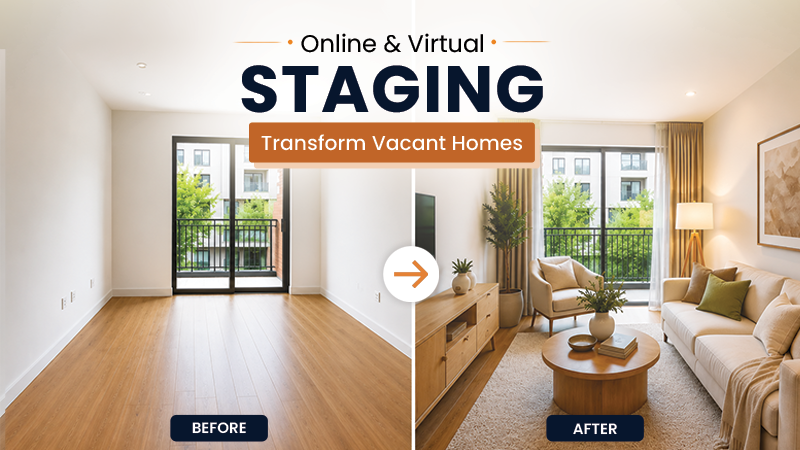
A vacant house can have a lot of potential. While empty rooms can make it hard for buyers to visualize living in it. Open floors and bare walls do not always provide an illustration of furniture placement or how the space might be used.
This is where online design and virtual staging for vacant homes can help. Furniture or décor items are not brought into the property. But designers add realistic furniture, décor, and styling to pictures of properties. This method of virtual home staging helps to make the home more visual without the time and logistics of traditional home staging.
How is the process carried out, though? Let’s review the important steps.
What Online Design and Virtual Staging Actually Involves
Virtual staging is a digital process of decorating photos of empty or dated rooms. Designers can introduce sofas, beds, tables, rugs, artwork, plants, and other décor, and still maintain the original structure of the property.
With virtual staging for vacant homes, each room can be designed according to its purpose. A living room can feature a cozy seating space. And a spare room can be transformed into a bedroom or a home office.
The intention is to educate the buyers on the layout and potential of the room, not to make an empty room look good.
Wondering how staging has an impact on buyers’ interest? Learn how virtual staging helps the buyer envision a vacant home and live in it.
Step 1: Capturing the Right Photos of a Vacant Property
The first step is to have good pictures of your property. Photographs should be clear and show how the room is arranged.
Things like windows, doors, flooring and storage areas should be visible. High-quality source photographs make it easy to create a realistic staged image.
Step 2: Choosing a Design Style and Layout
Then a suitable style and layout of furniture are selected.
Minimalist, modern, contemporary, traditional, Scandinavian and luxury designs are possible options. The home’s design and intended market may be a good indication of the proper appearance.
When it comes to virtual staging for realtors, selecting a style that appeals to the property’s prospective purchasers is particularly essential. A properly designed listing can make it more relevant and give a picture of how it can function.
The furniture should also be the right size for the room. An excellent layout displays the space without being too cluttered.
Not sure of the style that will work best for your listing? Try out the virtual staging services for realtors that feature design options suited to various properties.
Step 3: Digitally Furnishing the Space
Once the style is selected, the digital furniture and décor are then added to the picture.
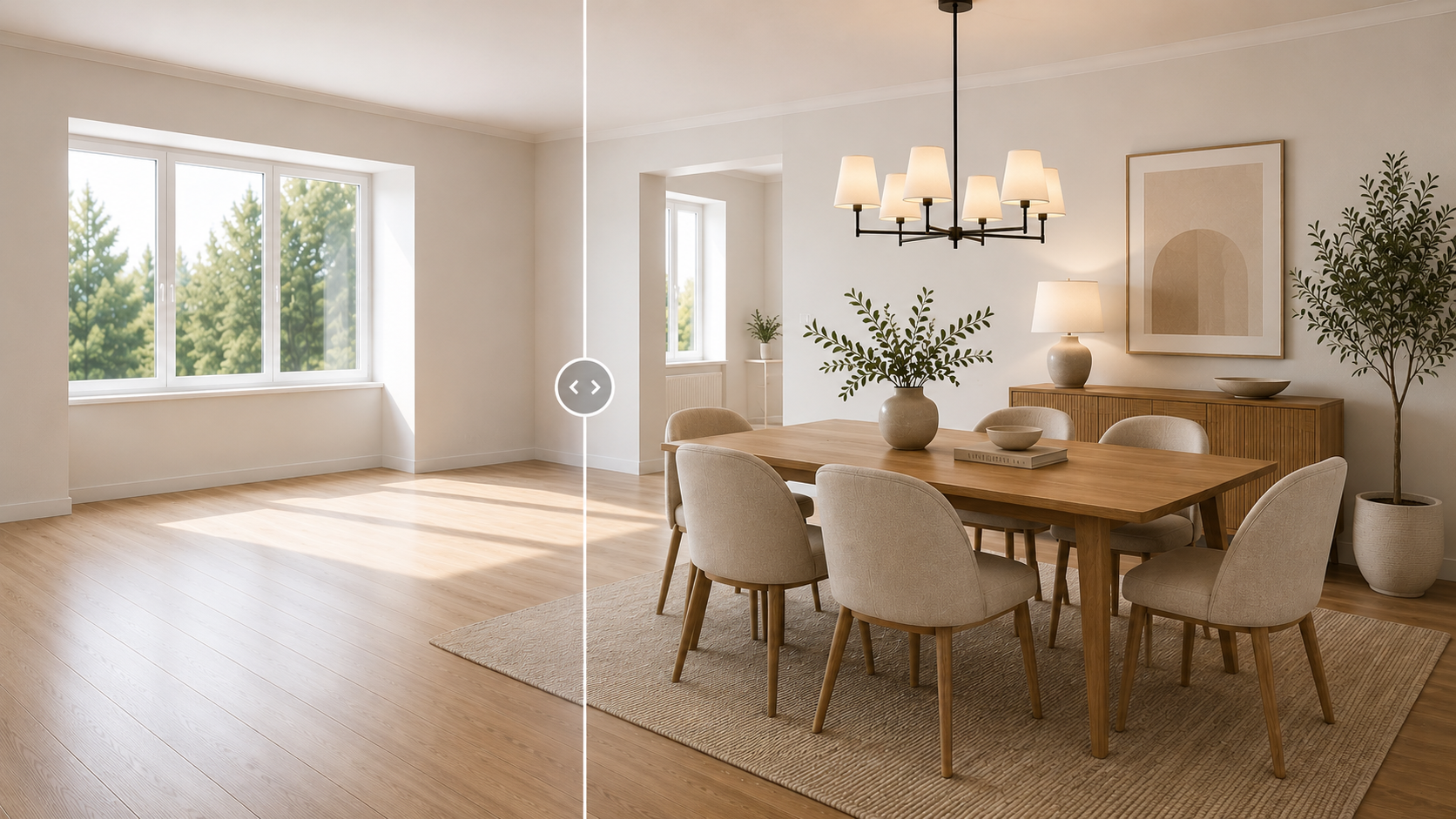
This can range from
- Sofas and chairs
- Beds with bedside tables
- Dining furniture
- Rugs and coffee tables
- Lamps and artwork
- Plants and accessories
The furniture arrangement is based on the perspective and size of the room. This enables the buyers to have a better idea of the available room.
Professional virtual staging services can also make changes to furniture and decor to match the style and ambiance of the home.
Step 4: Refining Lighting, Color, and Realism
The photo is then modified to make the digital additions appear more like the original photo.
The designers can change the light, shadows, colors, contrast and perspective. Furniture should be well supported, and shadows should be cast in the direction of the light source.
These details contribute to giving the image a realistic look with furniture, without being a blatant image manipulation.
Want to see the difference? Look through some real-life pre- and post-staging photos, and see how virtual staging can make “before” photos look “after.
Step 5: Final Review and Delivery
Once the images have been finished, they are checked for furniture positioning and realism look before delivery.
Depending on the provider, revisions might be provided for furniture or style changes.
Final pictures are sent digitally to be utilized on property websites, social media, and appropriate listing sites.
Virtual Staging Studio’s home virtual staging service is convenient for professionals marketing vacant homes who don’t want to stage the home themselves.
How Long the Process Takes
Virtual staging can be completed without furniture delivery, setup, or removal.
Turnaround depends on the number of images, design complexity, and revisions. Many projects can be completed within a few business days after the photos and instructions are provided.
What You Need to Provide to Get Started
To begin, you will generally need
- High-resolution property photos
- Your preferred design style
- The number of images to stage
- Furniture or colour preferences
- Details about the property and target buyers
When you are creating a design, it is important to have clear instructions to get the final design as you want.
The virtual staging cost is dependent on the number of images needed and turnaround time.
Thinking about cost? Compare virtual staging prices and choose one that suits your real estate requirements.
Conclusion
Online design and virtual staging for vacant homes can make empty property photos more engaging and easier for buyers to understand. The use of digital overlays of realistic furniture and décor allows sellers and realtors to see how the room might look and function.
There are no physical furniture items to be transported, arranged or removed as usual with staging. This makes virtual home staging an adaptable solution to promote vacant homes and enable home buyers to visualize what life will be like in the home.
Could staging affect the buyer’s interest? See how virtual staging can help the home sell.
Frequently Asked Questions
1. What is virtual staging for vacant homes?
The process of virtually adding furniture and decoration to blank images of a property to help prospective buyers visualize what the space will look like.
2. Do vacant homes really sell slower than staged homes?
Not always. Selling time depends on its price and location. Also, demand in the marketplace, though staging can enhance online presentation.
3. Is virtual staging as effective as traditional staging?
Both virtual and traditional staging are helpful for online marketing. But virtual staging allows a buyer to view the home with furniture.
4. What is the cost of virtual staging compared to traditional staging?
The virtual staging approach is usually less expensive. Because it does not involve hiring furniture, renting, delivering and setting up. Prices vary by provider and project.
5. Can virtual staging be used for MLS listings?
Absolutely, agents should always check the rules pertaining to digital changes and disclosures required to be made in the MLS.
Ready to Transform Your Property Photos?
Get professional virtual staging that makes your property photos more attractive to potential buyers.